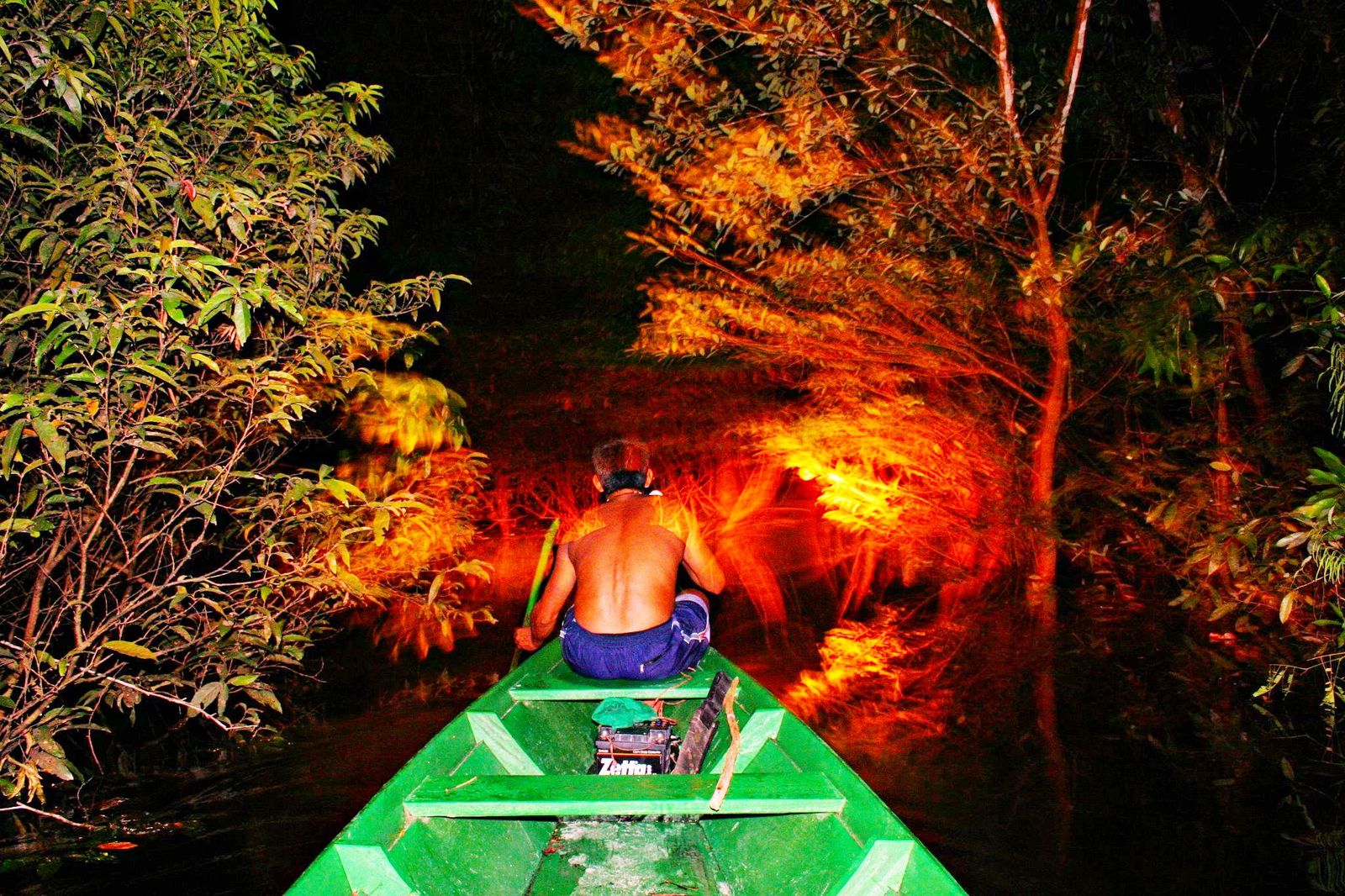
Night Walks in the Rainforest
Every jungle you visit during the day is a different jungle after dark. The birds that ran the show at noon go quiet, the heat drops out of the air, and a whole second cast of animals — frogs, snakes, spiders, and a long list of mammals most visitors never see by daylight — comes on shift. A night walk is the cheapest, lowest-tech way to meet that second jungle: a flashlight, a guide who knows the trail, and an hour or two after dinner. It is also, if you go in with the right expectations, one of the best things you will do on a jungle trip. This is a guide to what is actually out there after sunset, where in the world to go looking for it, how the good operators run these walks, and how to get the most out of one without ruining it for the animals or yourself.
Why the forest changes so completely after dark
Walk the same stretch of trail at 2pm and at 8pm and you would be forgiven for thinking someone swapped the ecosystem out from under you. By day, a tropical forest runs on sight and on the birds and monkeys loud enough to announce themselves from the canopy. Once the light drops, most of that daytime cast goes quiet and still — birds tuck into roosts, diurnal monkeys stop moving, and the visual, sun-driven world of the forest goes dark. What replaces it is a forest that runs on sound, scent, and touch instead of sight, and a long list of animals that spend their entire lives avoiding the very hours you were walking through them.
This isn't a small, marginal shift. A large share of tropical forest fauna — most of the amphibians, most of the arthropods, and a real portion of the mammals, from bats and rodents down to several of the forest's cats — are nocturnal or crepuscular, meaning they are built to be active around dusk, at night, or before dawn, and largely absent from the trail during the hours most visitors are out. That is not a quirk of a particular park; it's closer to the default setting for a rainforest. Skip the night walk and you are, by definition, missing most of what actually lives there.
The mechanics of why are straightforward enough. Heat and sun exposure are a real cost for a lot of small-bodied animals, particularly amphibians, whose skin loses moisture fast in direct light; night is simply a safer, cooler, wetter time to be out and moving. Predation pressure runs the other way for a lot of prey species — many of the birds of prey that would otherwise hunt frogs and small mammals are themselves diurnal, so the night shift trades one set of predators for a different, generally less visually-driven set. And for insects, night is when a huge amount of pollination, mating, and feeding activity actually happens, which is why a single flashlight beam on a good night can look like it's dragging color and movement directly out of what looked, minutes earlier, like empty leaf litter.
You don't need a rare animal to make a night walk worth doing. You need a flashlight, a patient guide, and the plain fact that the forest is a genuinely different place after dark — quieter in the way that matters and louder in the way that matters more.
What you'll actually see
Set expectations honestly before you go: a night walk is not a guaranteed jaguar sighting, and any operator who promises one is overselling. What it reliably delivers is a dense, close-up look at the forest's smaller and stranger residents — the animals that are genuinely easier to find at night than during the day, because that's when they're out.
Frogs
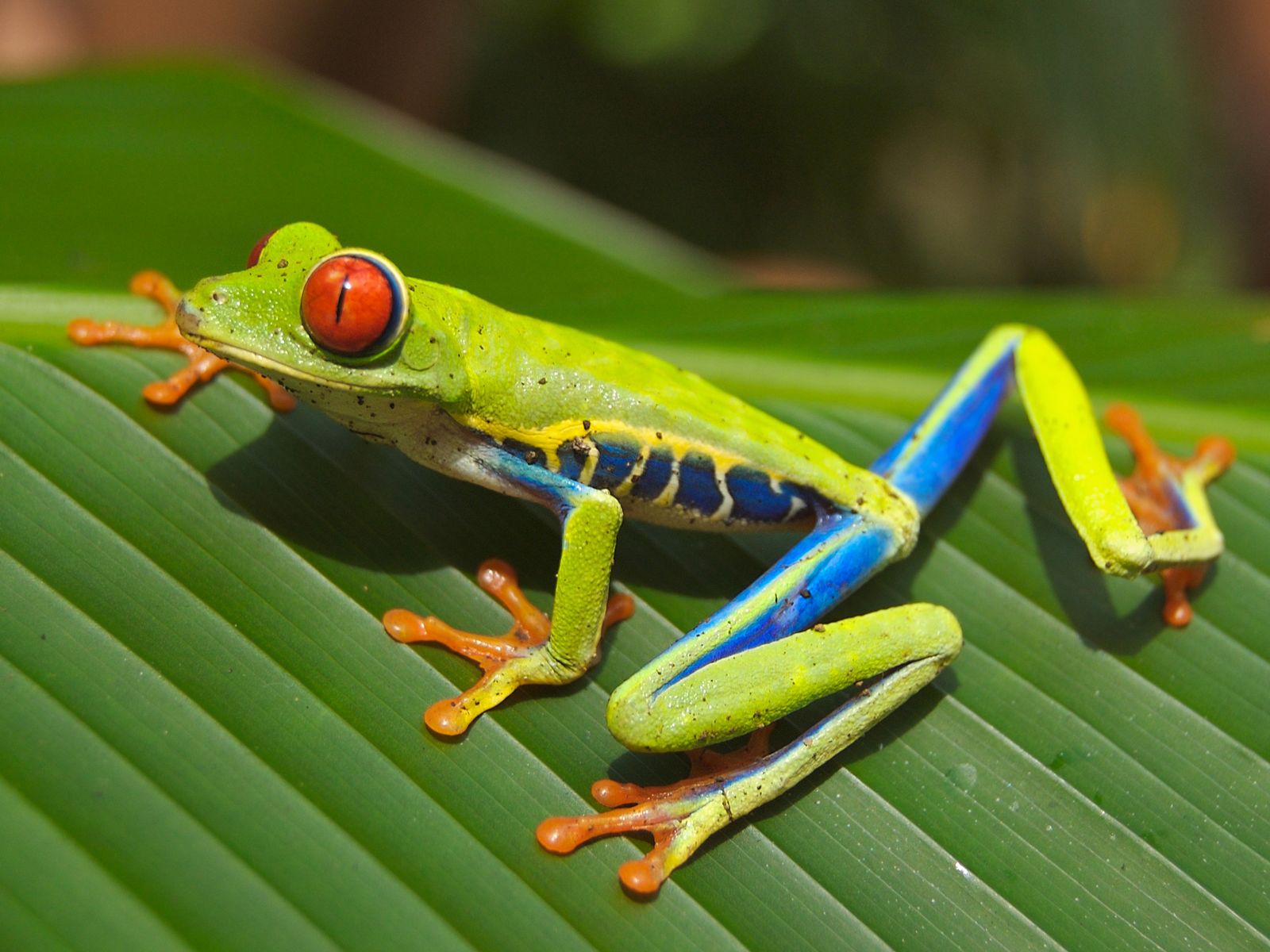
Frogs are the headline act of most tropical night walks, for the simple reason that they are loud, numerous, and drawn to the same damp leaf litter, streambanks, and standing water your trail tends to follow. The red-eyed tree frog (Agalychnis callidryas), bright green with orange feet and startling red eyes, is the animal most visitors picture when they imagine a Central American night walk, and it is a genuinely nocturnal species — spending the day motionless and camouflaged, eyes shut, against a leaf, and becoming active only after dark. Its red eyes aren't decorative: flashing them open when disturbed is thought to be a startle display, a split-second shock meant to buy the frog time to escape a predator. Glass frogs are the other prize sighting on a lot of Central and South American walks, translucent-skinned enough on the underside that you can, on a good look, see their internal organs and beating heart through the skin. Beyond the showcase species, ordinary rain frogs, tree frogs, and toads turn up in real numbers on almost any night walk near water, calling from the leaf litter and low vegetation in a chorus that is, by itself, one of the better reasons to go.
Snakes
Snakes are far more often heard about than actually seen on a night walk, and that's mostly a good thing — a slow, careful, guide-led walk with everyone on the trail and hands to themselves is exactly how you want a snake encounter to go. Guides in Central and South America commonly point out eyelash vipers coiled on low branches, and in the Amazon, boas are a realistic, if uncommon, night sighting. The standard field advice applies everywhere in snake country: stay on the trail, watch where you place your hands and feet, don't reach into leaf litter or under logs, and let your guide identify anything before you get close. None of this is meant to be alarming — snake bites on guided night walks are rare precisely because guides know how to keep a respectful distance — but it's the one part of a night walk where following instructions matters more than usual.
Mammals
This is where a night walk earns its keep for a lot of travellers, because several of the animals on it are essentially impossible to see by day. Kinkajous — golden, prehensile-tailed members of the raccoon family that spend their nights moving through the canopy after fruit and nectar — are one of the most commonly reported night-walk mammals across Central America, common enough that some lodges run walks built specifically around finding them. Opossums, several species of them, are common and unglamorous but genuinely nocturnal, often the first pair of eyeshine a beginner's flashlight catches. Olingos, another canopy-dwelling relative of the kinkajou, and armadillos rooting through leaf litter at ground level round out a fairly reliable mammal list on a decent night. Farther up the food chain, a night walk is also, statistically, your best shot at an ocelot or margay — still a long shot on any single walk, but one that only exists after dark, since both cats hunt almost entirely at night.
Insects and other invertebrates
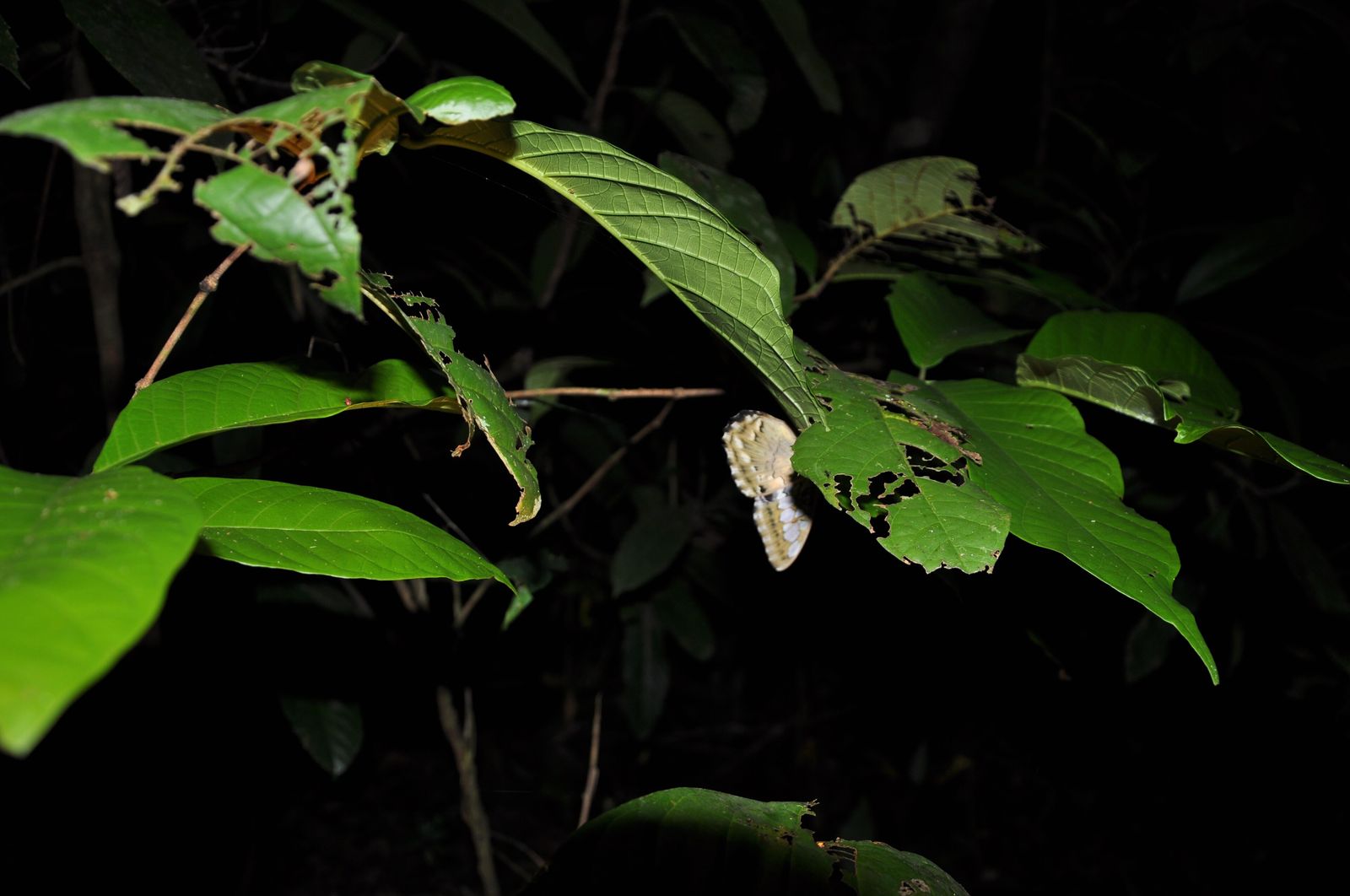
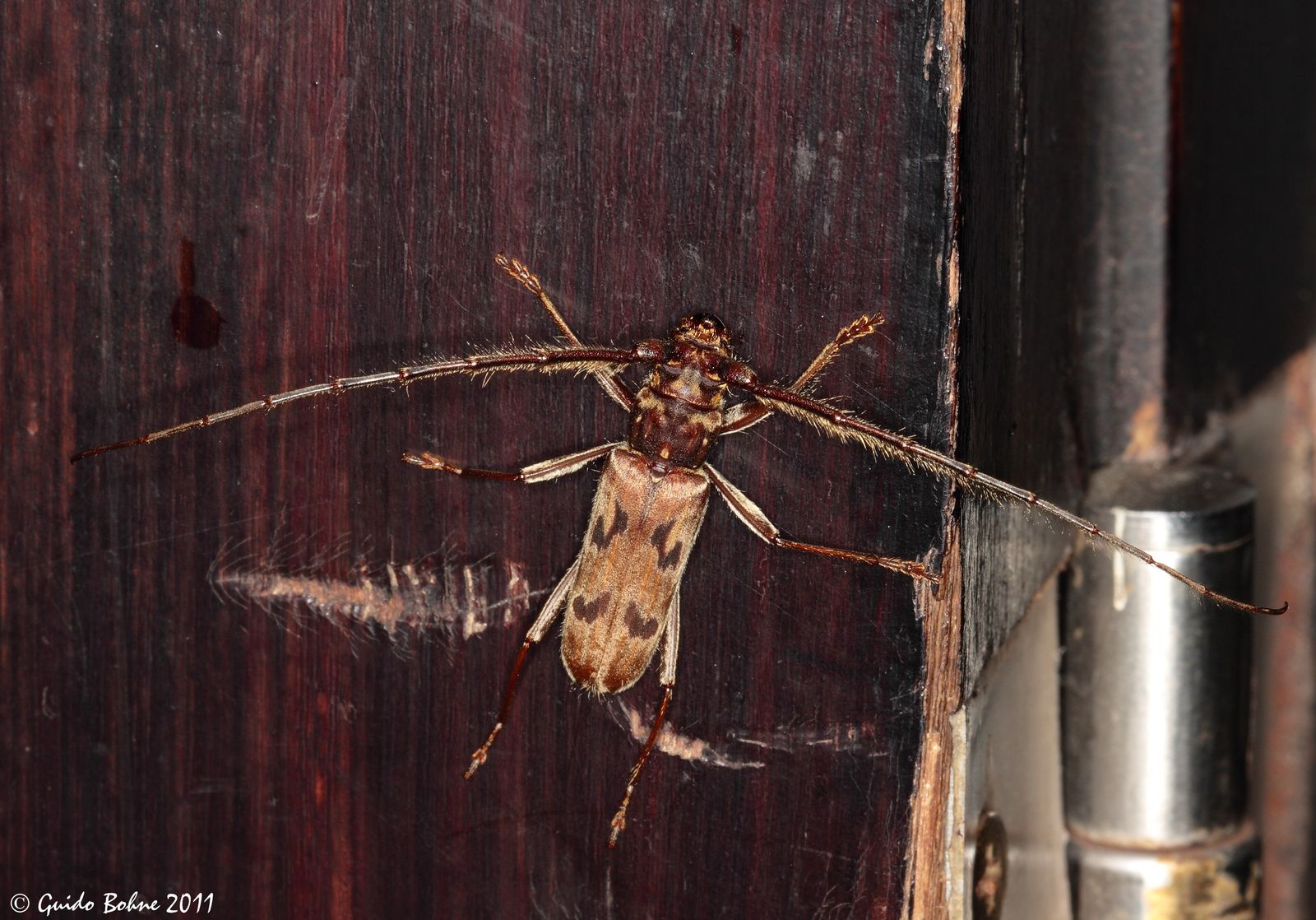
If you go in expecting only frogs and mammals, the insects will be the surprise. Tarantulas are a genuine, common night-walk sighting in a lot of tropical forest, often spotted sitting at the mouth of a burrow rather than out in the open — striking to see up close and, despite the reputation, not aggressive toward a torch beam kept at a respectful distance. Walking sticks and leaf insects are a favorite "hiding in plain sight" find, camouflage so complete that a good guide pointing directly at one still takes a moment to register. Leafcutter ants run their trails around the clock, but a night beam catches the whole conveyor-belt operation lit up against dark ground in a way daylight never quite does. Add moths drawn to the light, click beetles, walking pairs of stick insects, and — depending on season and location — the first sparks of fireflies, and the invertebrate list on a single walk is often longer than everything else combined.
Good to know
Look for eyeshine, not the animal itself. Most nocturnal vertebrates — frogs, mammals, and caimans alike — have a reflective layer behind the retina called the tapetum lucidum, which bounces light straight back at the source. Sweep a flashlight beam at eye level across foliage or a riverbank and you're looking for a pinprick of orange, green, or red light staring back, not a whole animal. That single reflected point is usually the first and only clue you get before your guide narrows it down.
Costa Rica: the classic night walk country
Costa Rica turned the night walk into a standard, bookable activity long before most other jungle destinations caught up, and it remains the country where the format is most developed — small-group, guide-led, an hour or two on foot with flashlights, usually booked as a separate evening add-on to a daytime itinerary rather than folded into it.
Monteverde Cloud Forest
Monteverde is arguably the country's signature night-walk destination, and the reason is straightforward: its cloud forest reserves run dedicated evening tours built specifically around nocturnal wildlife, with kinkajous a headline draw on operator listings, alongside sleeping birds, tarantulas, and a long list of frogs and insects found along the reserve's trail network after dark. The cooler, mistier air at this elevation also means a noticeably different mix of species than the lowland walks further south — this is prime tarantula and sleeping-bird territory as much as frog territory.
La Fortuna and Arenal
Down at the base of Arenal Volcano, La Fortuna has built a whole small industry around evening rainforest walks, most of them explicitly marketed around finding the red-eyed tree frog in its natural nighttime habitat rather than in a photo tank. The lowland, warmer conditions here favor frogs and reptiles over the cloud-forest mammal list further uphill, and several operators run walks through private reserves specifically maintained for reliable amphibian sightings.
Corcovado and the Osa Peninsula
Corcovado National Park, on the remote Osa Peninsula, is the wildest and most demanding of Costa Rica's night-walk destinations — a night walk here is typically an extension of a multi-day guided visit rather than a stand-alone evening tour, run through some of the most biodiverse lowland rainforest left in Central America. It's a genuinely different experience from a Monteverde evening tour: fewer other visitors, a longer list of possible mammals given the park's size and protection status, and a guide whose knowledge of the trail after dark matters even more than it does elsewhere.
The Caribbean lowlands
Lodges along Costa Rica's Caribbean coast — the lowland rainforest around the Golfo Dulce and further north toward Tortuguero — run their own version of the same walk, generally warmer and wetter than the Pacific side, with a frog and insect list to match. Nicuesa Rainforest Lodge, on the Golfo Dulce, is one of several properties that treats its night walks as a core part of the guest experience rather than an optional extra, reflecting how central the format has become to how the country markets its rainforest lodges generally.
The Amazon: night walks and river spotlighting
The Amazon runs a different version of the same idea, and in the lowland basin around Tambopata, in southeastern Peru, it's built around two distinct formats rather than one.
Trail-based night walks
The first is a straightforward guided walk on forest trails near a jungle lodge, typically run for a couple of hours after dark and covering much of the same invertebrate and amphibian ground as a Central American walk — tarantulas, walking sticks, frogs, and a real chance at snakes, with the added texture of Amazon-specific sound: a night chorus that layers frogs, insects, and the occasional distant howler or owl into something considerably louder and denser than most first-timers expect.
River spotlighting for caiman
The second, and the one that's genuinely distinct to river-based Amazon lodges, is a night boat ride along the Tambopata or Madre de Dios rivers, guides sweeping a flashlight along the banks specifically to find caiman. This works because of the same tapetum lucidum eyeshine that gives away frogs and mammals on land — a caiman's eyes catch a beam of light and throw back a distinctive orange-red glow, visible from well out on the water, long before the animal itself is identifiable. Guides "pan" the light slowly along the shoreline at eye level rather than sweeping it, since a slow scan is what actually catches that reflected point of light. Black caiman and spectacled caiman are both present across the region, and a boat-based night search regularly turns up several individuals of varying size in a single outing, along with the chance of a capybara or two along the bank and the occasional owl overhead.
Season matters more here than almost anywhere else
Tambopata's dry season, running roughly from May through October, is the better stretch for river-based spotlighting specifically: water levels drop, riverbanks are more exposed, and caiman searching from a boat becomes noticeably more productive than during high water, when the same banks are partly submerged and animals have far more flooded forest to disappear into. Trail-based walks are less season-dependent, though the same drier months make for easier underfoot conditions generally.
Borneo and Southeast Asia's night forests
Southeast Asia's rainforests run a genuinely different cast of nocturnal characters than the Americas, which makes a night walk here worth doing even if you've already done one in Costa Rica or the Amazon. Bali and the wider Indonesian archipelago sit at the edge of this world, but the deeper old-growth forest experience is further north and east, in Malaysian Borneo.
Sabah and Danum Valley
Sabah, on Malaysian Borneo, is one of the region's best-regarded destinations for night wildlife specifically, with lodges and reserves around Danum Valley and the wider Sabah rainforest network running dedicated night drives and walks aimed at a very different target list than a Central American tour: slow lorises, tarsiers, civets, colugos (the gliding "flying lemurs," which aren't lemurs at all), mouse deer, and flying squirrels are all realistic sightings here, none of which exist anywhere in the Americas. Slow lorises in particular are a genuinely sensitive species — venomous, unusually slow-moving, and increasingly targeted by the illegal wildlife trade — which makes choosing an operator with real conservation standards more important here than almost anywhere else on this list; a good Sabah guide will keep a respectful distance and limit the time a light stays trained on one.
What makes it different
Where a Costa Rican or Amazon night walk leans heavily on amphibians as the reliable core sighting, a Borneo night walk leans more on small mammals — the region's frog diversity is real but less of the headline act than the primates, gliders, and civets that dominate operator listings. It's also, on balance, a more specialized trip to arrange: Sabah's night-drive infrastructure is concentrated around a smaller number of established lodges and reserves rather than spread across a dense network of independent operators the way Costa Rica's is, so booking through an established property with real guiding experience matters more here than picking whichever tour is cheapest.
Best time and conditions
Night walks happen year-round almost everywhere on this list — unlike a migratory bird or a seasonal bloom, nocturnal wildlife doesn't disappear for months at a time. What actually shifts by season is density and ease of access, not whether the animals are there at all.
Wet versus dry season
In most Central American and Amazon locations, the wet season brings out more frogs and amphibians overall — damp conditions are exactly what they're built for, and breeding activity, with its accompanying chorus of calls, tends to peak alongside the rain. The tradeoff is muddier trails and a higher chance of getting wet yourself mid-walk. The dry season trades some of that amphibian abundance for easier underfoot conditions and, in river-based destinations like Tambopata, meaningfully better wildlife visibility, since lower water levels concentrate animals along more exposed banks.
Moon phase and timing
A darker sky helps. Around the new moon, ambient light is at its lowest and flashlight beams do more of the work of picking out eyeshine and movement against the dark; a bright full moon washes out some of that contrast, though it rarely rules out a walk entirely. Timing within the night matters too — the first couple of hours after dusk are usually the most productive window, when diurnal animals have just gone quiet and nocturnal ones are freshly active, rather than the deep, quieter hours after midnight that most tour schedules don't reach anyway.
Good to know
A short, hard rain shower right before a walk is often a good sign, not a bad one — many frog species become noticeably more vocal and active right after rain, which is exactly when their preferred damp conditions arrive. Don't cancel a night walk over drizzle; it's frequently the best possible timing.
Doing it responsibly
A night walk is a genuinely low-impact way to see wildlife when it's run well, and a genuinely disruptive one when it isn't — the difference comes down almost entirely to how the light is used.
Red filters, and why they matter
Good operators use red-filtered light rather than plain white light, and there's real research behind the choice, not just tradition: studies comparing detection rates found that white light actually reduces the number of individual animals and species spotted compared to red light, likely because a lot of nocturnal wildlife either can't perceive red wavelengths well or finds them far less disruptive than a bright white beam. That means a red-filtered flashlight isn't just gentler on the animals — it's also, somewhat counterintuitively, the more effective tool for actually finding them, since animals disturbed by white light tend to freeze, flee, or duck out of sight before a guide can point them out.
How long to hold the light on an animal
The general guidance from wildlife-viewing ethics groups is to keep any spotlight beam brief — a few minutes at most on sensitive species, longer stretches genuinely risking stress or disorientation, particularly for small mammals and owls that rely on night vision to hunt or avoid predators themselves. A light held steady on an animal's eyes for an extended period, or swept back and forth to "find the best angle" for a photo, is exactly the wrong way to do it; a brief, angled beam that lets the animal go back to what it was doing is the right one.
Group size and behavior on the trail
Small groups move quieter and see more — a night walk with fifteen people talking and shuffling down a trail will flush out far less than one with four or five people moving slowly and speaking in low voices. Stay on the trail, keep hands off vegetation you can't see clearly, and let the guide make first contact with anything that could bite, sting, or simply doesn't want to be touched. None of that is unique to night walks, but it matters more after dark, when your own visual judgment is doing a fraction of the work it normally does.
Choosing an operator
The clearest sign of a well-run night walk is a guide who narrates what they're doing as much as what they're finding — explaining why the light is red, why the group is pausing before a known frog perch, why everyone needs to stay single-file past a particular tree. Operators who instead promise guaranteed sightings of a specific rare animal, or who let guests handle whatever's found, are worth skipping regardless of how good their reviews look.
Field tips for actually spotting things
Bring the right light
A dedicated flashlight or headlamp with a reasonably strong beam is worth having even if your guide provides one — a second light means more eyes covering more ground, and a headlamp keeps your hands free for the inevitable moment you need them for balance on an uneven trail. If you own a red-filtered light, or can improvise one with red cellophane over the lens, use it; if not, keep any white light angled down and brief rather than sweeping it constantly at eye level.
Scan low and scan the edges
Most of what you'll find on a night walk lives within a few feet of eye level or lower — leaf litter, low branches, tree trunks, streambanks — rather than high in the canopy, which is genuinely hard to search effectively from a trail after dark. Sweep the beam slowly along the trail edges and the understory rather than up into the darkness overhead, and pause often; movement and reflected eyeshine both reward a beam that lingers rather than one that's constantly moving.
Listen as much as you look
A night walk rewards your ears at least as much as your eyes. A sudden change in the frog chorus, a rustle in leaf litter, or the particular clicking of a walking stick's footfall (yes, they make a faint sound) are all things an experienced guide will react to before their light even moves. Stop talking, stand still for a moment when your guide does, and let the ambient sound tell you where to look.
Wear the right gear
Closed shoes, long trousers, and a layer against the evening damp are standard for every location on this list — temperatures drop noticeably after dark even in the lowland tropics, and closed footwear matters both for comfort on an uneven trail and as basic sense in snake country. Bug spray is worth applying before you leave, not mid-walk, since stopping to reapply costs you exactly the stillness that makes spotting easier.
Trust the guide's pace
A good night walk moves slowly — genuinely slowly, often covering less ground in ninety minutes than you'd cover in fifteen during the day. That pace is the entire method, not a sign the walk is dragging. Resist the urge to push ahead or hurry a guide who's stopped to listen; the pause is usually exactly when something turns up.
Which jungle stays put you closest
Night walks work best when they're not a special add-on you have to travel for — when the forest starts at the edge of the property rather than a bus ride away. Lodges in Costa Rica's Monteverde, La Fortuna, and Osa Peninsula regions, jungle stays along Peru's Tambopata river system, and rainforest properties in Bali and across Malaysian Borneo are all set up around exactly this idea: a guide meets you at the lodge after dinner, and the walk begins on the property's own trails rather than a drive away. That proximity is worth prioritizing when you're choosing where to stay — a lodge with its own trained night guides and maintained trail network will consistently outperform a hotel that has to bus guests out to a separate tour operator.
If night wildlife is the centerpiece of your trip, it pairs naturally with a few other guides on this Journal. Fireflies and bioluminescence in the jungle covers one specific slice of the after-dark forest in more depth, our guide to where to see sloths is worth reading alongside this one since two-toed sloths lean more nocturnal than most visitors realize, and the monkeys of the rainforest rounds out the daytime canopy list a night walk deliberately trades away. If you're building a longer trip around Brazil's Amazon or the wider Caribbean jungle circuit through Puerto Rico, both regions run their own versions of the same walk through local lodges and reserves, even where it's less heavily marketed than in Costa Rica.
For picking an actual stay, browse the full list of vetted jungle properties by country on our destinations directory, or go straight to the pages for Costa Rica, Peru, or Bali if one of those already anchors your trip. JungleBnB doesn't hold inventory or take payment for placement, so what you'll find there is the same shortlist we'd hand a friend planning the same trip.
Common questions
Is a night walk safe?
Yes, when it's guided. A trained guide knows the trail, carries the right light, and knows how to identify and give space to anything venomous before guests get close. The main real risks are the same as any uneven trail after dark — a stumble or a scrape — which closed shoes, a light of your own, and a slow pace largely take care of. Wandering off on your own after dark without a guide is a different, and much less sensible, proposition.
What should I bring on a night walk?
Closed shoes, long trousers, a light layer against the evening chill, insect repellent applied before you set out, and your own flashlight or headlamp if you have one, ideally with a red filter or red cellophane over the lens. Leave sandals and shorts for the daytime trails.
Will I actually see anything, or is it a gamble?
Frogs and insects are close to a sure thing in any decent rainforest with a competent guide — the amphibian and invertebrate list on a typical walk is genuinely long. Specific mammals like kinkajous, ocelots, or slow lorises are real possibilities but not guarantees on any single walk; two or three walks across a longer stay meaningfully improve your odds on the harder-to-find species.
Why do guides use red light instead of white?
Research comparing the two found that white light actually reduces how many animals and species a search turns up compared to red light, likely because many nocturnal species see red wavelengths poorly or find them far less disturbing. It's both the more animal-friendly choice and, in practice, the one that finds more wildlife.
Can I touch or hold what we find?
No. Even where an animal looks calm under torchlight, handling causes real stress, and for a species like the slow loris in Borneo — venomous and heavily affected by the illegal wildlife trade — hands-on contact is a genuine welfare and conservation problem, not just bad etiquette. A guide who offers to let you hold a frog or a tarantula for a photo is a warning sign, not a bonus.
Do I need to go deep into the Amazon or Borneo to see good night wildlife, or does Costa Rica count?
Costa Rica genuinely counts, and for a lot of travellers it's the easiest, most accessible version of this experience — a dense network of established night-walk operators, reliable frog and mammal sightings, and lodges built around the format. The Amazon and Borneo add species you can't find anywhere else, but they're a bigger trip to arrange, not a better one by default.
- Ficus Tours — Night Walk in Corcovado: A Nocturnal Adventure — night-walk format and wildlife in Corcovado National Park, Costa Rica.
- Nicuesa Rainforest Lodge — Wildlife Night Walks in Costa Rica — nocturnal wildlife and night-walk practices on Costa Rica's Golfo Dulce coast.
- Rainforest Expeditions — Jungle Night Walk, Tambopata, Peru — trail-based night walk format and nocturnal species in the Peruvian Amazon.
- Paradise Yakari — Caiman Searching Guide: Amazon Night Safaris & Tips — caiman eyeshine spotting technique and dry-season conditions on the Tambopata and Madre de Dios rivers.
- Paradise Yakari — Exploring Night Wildlife in Tambopata, Peru — general nocturnal wildlife and night-boat spotlighting in Tambopata.
- Mammal Research (Springer Nature) — Optimising Nocturnal Mammal Surveys in Tropical Forests: When Red Light Is the Key — comparative detection rates of red versus white spotlighting on nocturnal mammals.
- Chiawa Safaris — Why We Use Red Light Filters on Spotlights — rationale for red-filtered spotlighting on wildlife-viewing ethics.
- Sticky Rice Travel — Top 10 Wildlife Encounters in Sabah, Borneo — nocturnal species and night-drive destinations in Sabah, including Danum Valley.
More from the Journal.
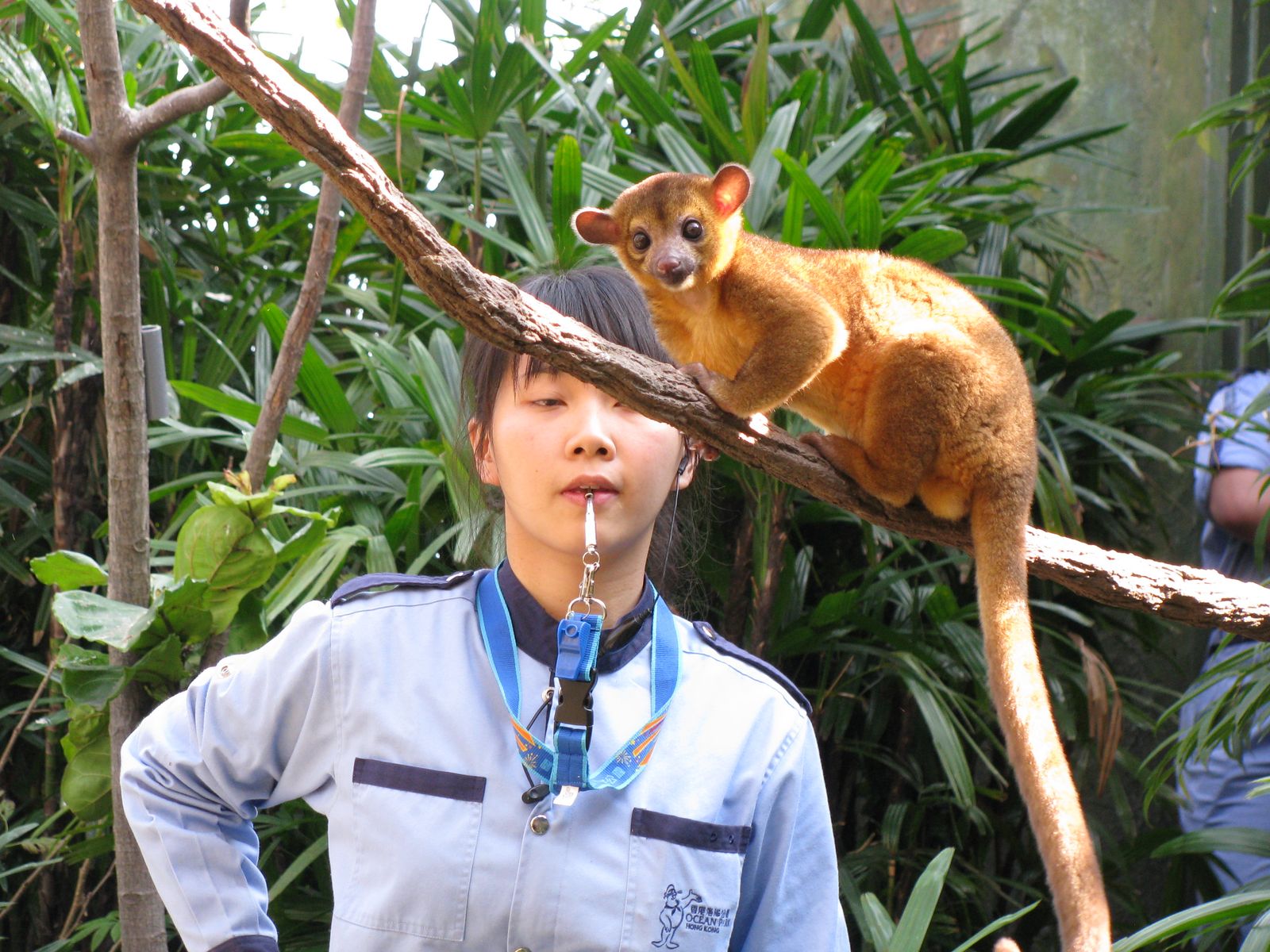 Photo: shankar s. from Dubai, united arab emirates, CC BY 2.0
Where to See Sloths in the Wild
The internet's favourite animal is real, wild and findable — where to reliably see sloths, how to spot them, and the stays that put you closest.
 Photo: Michael Barera, CC BY-SA 4.0
The Monkeys of the Rainforest
Howlers waking you at dawn, capuchins raiding the deck — a field guide to the primates you will meet on a jungle stay, and where to meet which.
 Photo: Charles Miller from Basingstoke, United Kingdom, CC BY 2.0
Toucans & the Tropical Birds You'll See
The rainforest is the richest bird habitat on earth. Toucans, macaws, quetzals and hummingbirds — what to look for, and the best places to look.
 Photo: Derek Ramsey (Ram-Man), CC BY-SA 4.0
Find your own piece of the canopy.
Treehouses, bamboo houses and rainforest villas across 17 destinations — found, vetted and written up honestly.
Browse all destinations