Cloud Forests Explained
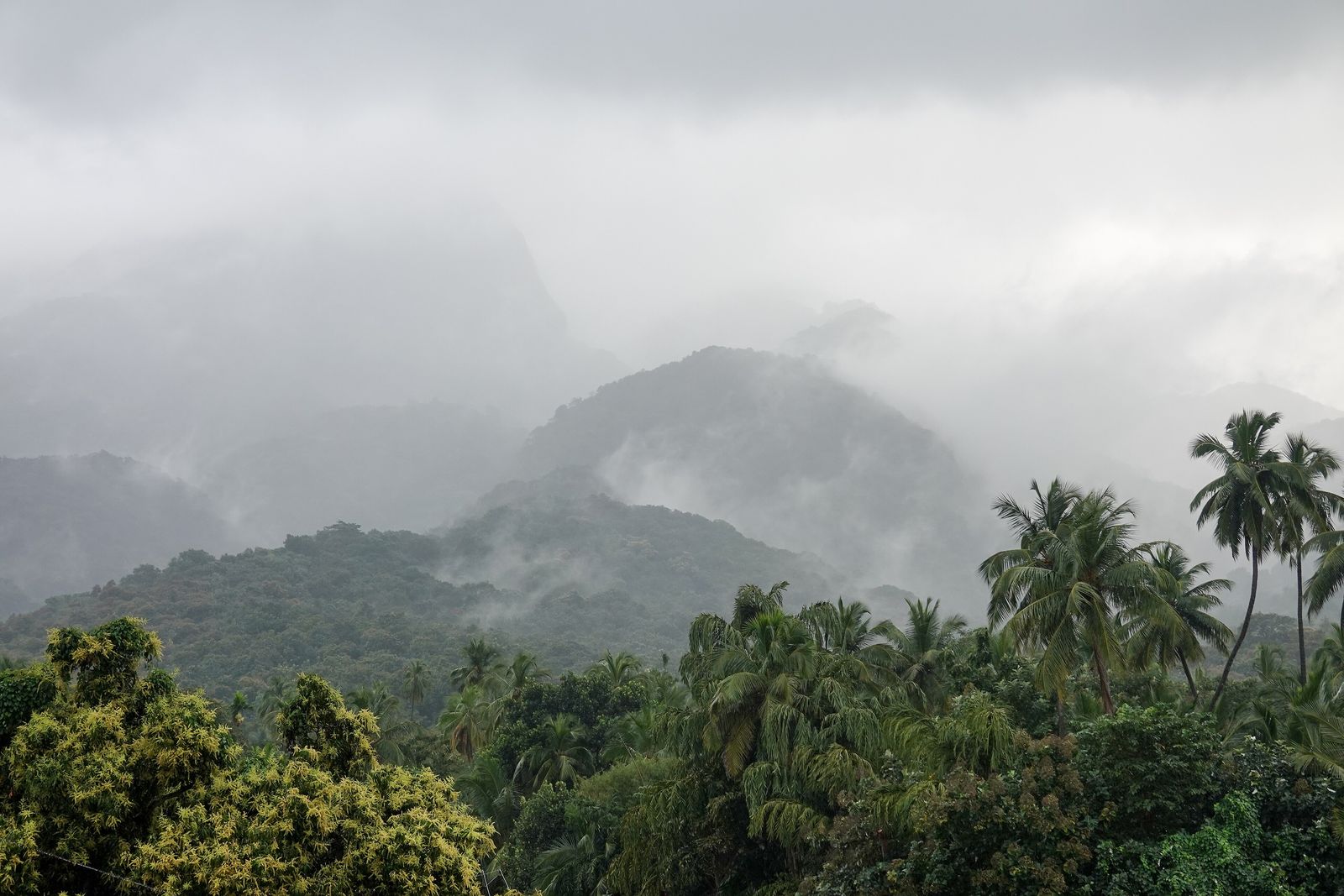
Cloud forest is the strange middle child of the tropics — too high and too cold to be rainforest, too wet and too green to be alpine wilderness, and permanently wrapped in the fog that gives it its name. You can be standing in bright sun on a ridge in Costa Rica or Sri Lanka and watch a wall of cloud roll uphill and swallow the trees in front of you within a minute. That fog is not incidental weather. It is the thing that built the ecosystem, feeding trees and epiphytes that would starve without it and creating some of the most crowded, strangest-looking, hardest-to-photograph biodiversity on the planet. This guide covers what a cloud forest actually is, why it looks the way it does, where in the world to find the real thing, and how to see it without pretending you understand it better than you do.
What a cloud forest actually is
A cloud forest is a montane forest, almost always tropical or subtropical, that sits at the elevation where clouds regularly form and drag straight through the canopy rather than staying up in the sky where clouds are supposed to be. Ecologists usually put the band somewhere between 1,000 and 3,500 meters, though the exact altitude shifts with latitude, the shape of the mountain, and how close it sits to an ocean — a cloud forest near the equator often sits higher than one further from it, because the whole climate band is compressed differently depending on how much heat the mountain is fighting.
What makes the ecosystem is not the elevation number itself but what happens at it: warm, moisture-loaded air gets pushed up a slope, cools as it rises, and condenses into cloud right where the forest is standing. At the higher, more exposed parts of a cloud forest, that cloud cover can sit on the trees for somewhere between 200 and 350 days a year — which means "misty morning" is not really the right mental picture. For long stretches, the forest is simply inside a cloud, all day, for most of the year.
That constant immersion does something rainfall alone can't. Trees and plants in a cloud forest pull water directly out of the fog itself, a process usually called fog interception or fog stripping — leaves, moss and lichen physically comb moisture out of the passing cloud and let it drip to the ground as if it had rained, even on a day with no rain at all. Depending on the site, this fog capture can add somewhere in the range of an extra 20 to 60 percent on top of a cloud forest's regular rainfall total, which is already substantial: annual totals across cloud forest sites worldwide range roughly from 500 millimeters to as much as 6,000 millimeters depending on location. That extra water is one reason cloud forests function as watersheds for entire regions downstream, feeding rivers, coffee farms and cities that never see the fog themselves.
A cloud forest doesn't need rain to be wet. The weather is the ecosystem.
Why the trees look like that
The first thing that throws people used to lowland rainforest is how short a cloud forest actually is. Where a rainforest canopy can tower 40 meters or more overhead, a cloud forest's canopy typically runs somewhere between 10 and 25 meters — a fraction of the height, and often gnarled and multi-stemmed rather than the tall, straight trunks of an Amazon documentary. Slower growth at altitude, thinner soils, frequent landslides on steep terrain, and regular wind and storm damage all keep the trees stunted compared to their lowland cousins. At the very highest, most exposed elevations, the forest can shrink further still into what's sometimes called elfin or dwarf forest — a tangle of stunted, twisted trees only a few meters tall, packed shoulder to shoulder against the wind.
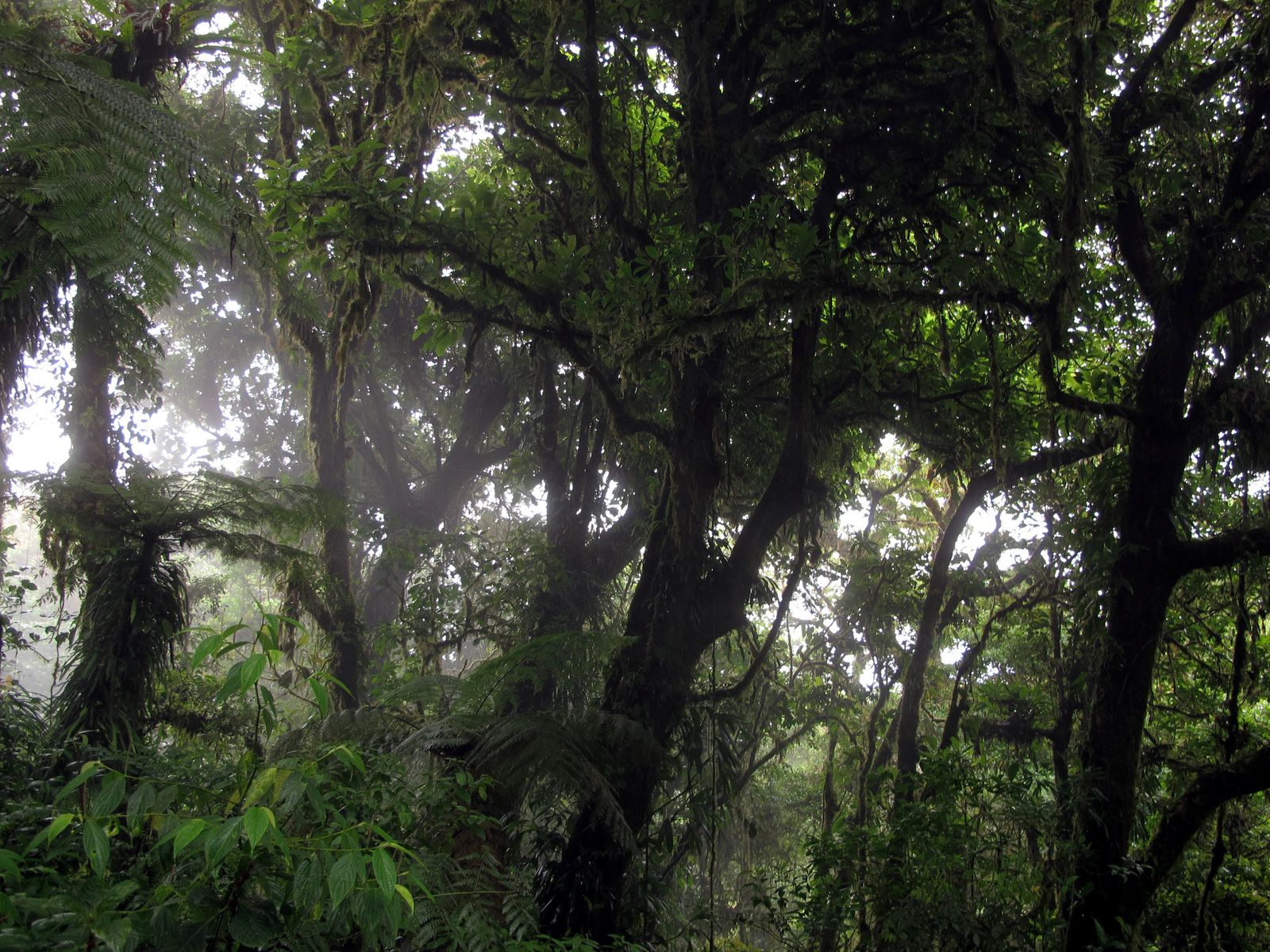
What the trees lack in height, they make up in cargo. Because bark is almost impossible to find bare in a cloud forest, every horizontal branch, and most vertical trunks, gets colonized by epiphytes — plants that grow on other plants rather than in soil, living entirely off moisture and nutrients pulled from the air and the fog around them. Mosses, ferns, orchids, bromeliads and aroids stack up in layers thick enough that a single mature branch can carry a small hanging garden's worth of other species. The scale of this is genuinely extreme: epiphyte biomass in cloud forest can run past 44 tonnes per hectare, more than in any other forest type on Earth, and five plant groups — orchids, bromeliads, aroids, peperomias and ferns — account for roughly 85 percent of the more than 27,600 epiphyte species recorded worldwide. Most of that diversity is concentrated in exactly this kind of forest.
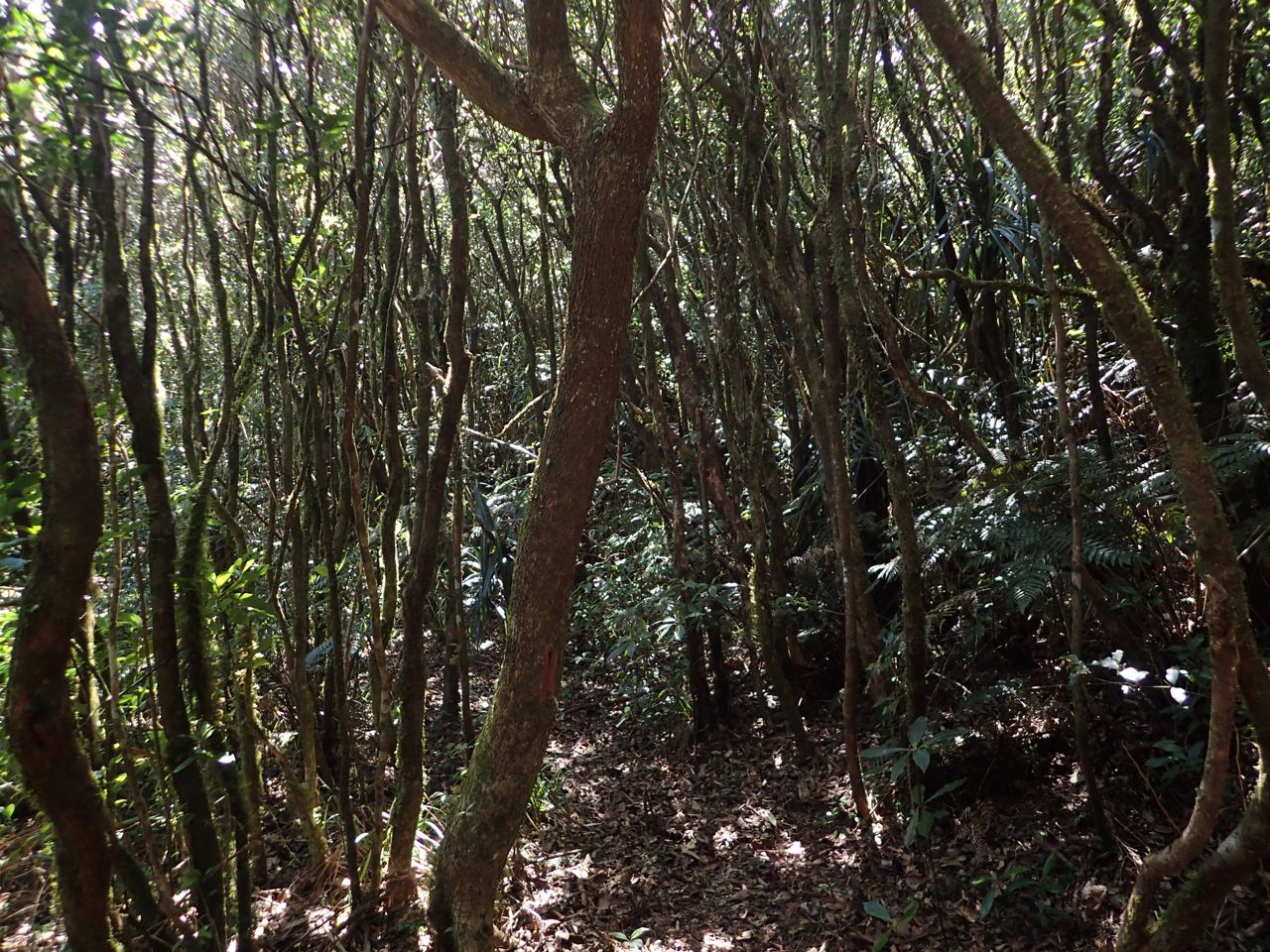
The practical result is a forest that looks and feels different from anything at sea level. Visibility is often short because the mist itself limits how far you can see. Sound carries oddly, muffled by wet foliage. And the ground underfoot is frequently a spongy mat of roots, moss and decomposing leaf litter rather than the firmer soil of drier terrain — one more reason cloud forest trails are almost always narrower, muddier and slower going than their lowland equivalents, whatever the map distance says.
Why cloud forests are so full of life
Cloud forests cover a small fraction of the planet's land surface, yet they consistently punch far above their size in species counts and, more specifically, in endemism — species found nowhere else. Part of the reason is geographic: cloud forest habitat is naturally fragmented, sitting in bands partway up isolated mountains and ranges rather than spreading in a continuous sheet the way lowland rainforest can. Populations separated by valleys, drier lower slopes or entirely different mountains have had a very long time to drift apart, and that isolation is a classic recipe for new species evolving in place and staying put.
The stable, saturated microclimate helps too. A forest that's cool, wet and fog-bound for most of the year creates habitat for amphibians and epiphyte-dependent insects that would dry out and die almost anywhere else in the tropics — which is part of why cloud forest regions worldwide are disproportionately rich in frog and salamander diversity, much of it highly localized to a single mountain range or even a single valley.
Good to know
The cloud forests running through Ecuador, Colombia and Peru hold a higher diversity of epiphytes than anywhere else on the planet — a direct product of the Andes packing an unusually wide range of elevations, rainfall patterns and microclimates into a relatively narrow strip of mountains.
Birdlife tends to be the most visible payoff for visitors, and cloud forest regions are consistently among the best birding destinations on Earth for exactly this reason. Costa Rica's Monteverde reserves alone have recorded more than 400 bird species, alongside over 100 mammal species and some 1,200 species of amphibians and reptiles — and it's one of the few remaining places that still supports all six of the region's wild cat species, from jaguar down to the small, rarely seen oncilla, even though actually seeing one on a day visit is close to a lottery ticket. Further north in Ecuador, the cloud forest around Mindo has recorded more than 400 bird species in its immediate area and is widely regarded as home to the greatest concentration of endemic montane birds anywhere in the world — hummingbirds especially, with feeder setups at local lodges regularly pulling in a dozen or more species at arm's length.
Where to find real cloud forest
Cloud forest exists wherever a mountain, an ocean-moist air mass and the right elevation band line up, which turns out to be a fair number of places scattered across the tropics and subtropics. A few regions are worth knowing by name if you're planning an actual trip rather than just admiring the concept.
Costa Rica
Monteverde is the reference point most travelers already have in their head, and it earns the reputation — a reserve system sitting directly on the Continental Divide where Pacific and Caribbean weather collide and wring out near-permanent mist. We cover it in full, trail by trail and reserve by reserve, in our dedicated Monteverde cloud forest guide, and it remains one of the most accessible, well-organized places in the world to see this ecosystem up close without a serious expedition. It's a natural first stop if Costa Rica is anywhere on your list.
Ecuador
Ecuador packs a startling range of cloud forest into a small country, most famously around Mindo, a couple of hours from Quito, and through the wider Chocó bioregion further west. This is the birding capital of the cloud forest world by most measures — the density of hummingbird species alone draws dedicated trips from serious birders who have already done Costa Rica and Peru. Sustainable lodges built directly into the forest, like the river-crossing, hydro-powered El Monte ecolodge near Mindo, exist specifically to put visitors inside this habitat rather than looking at it from a bus window. We go deeper on the country's cloud forest and adjoining Amazon foothills in our Ecuador Amazon and cloud forest guide.
Colombia
Colombia's Andes run cloud forest almost the entire length of the country, from the coffee region's steep, misty slopes down through ranges like the Sierra Nevada de Santa Marta, which climbs from Caribbean beach to snow-capped peak within a striking short distance and passes through a genuine cloud forest band on the way up. Colombia has become one of the fastest-growing cloud forest and highland birding destinations on the continent over the past decade.
Peru
Peru's cloud forest sits in the transition zone locals call the ceja de selva, the "eyebrow of the jungle," where the high Andes drop toward the Amazon basin. Machu Picchu itself sits within this cloud forest band along the Urubamba River, part of why the ruins so often appear wrapped in mist in photographs rather than under a clear blue sky. Further into the Manu region, cloud forest forms the middle step in one of the most complete elevation gradients left on the continent, running from high Andean grassland down through fog-bound forest before the terrain ever reaches true lowland Amazon — one of the reasons Peru keeps showing up on serious birding and wildlife itineraries rather than just backpacker routes.
Sri Lanka
Sri Lanka's central highlands hold one of the more overlooked cloud forest systems anywhere, centered on Horton Plains National Park, a montane plateau sitting between roughly 2,100 and 2,300 meters that combines open grassland with the most extensive remaining cloud forest left in the country. It sits alongside the Knuckles Mountain Range and the Peak Wilderness Sanctuary, and together the three were inscribed as a UNESCO World Heritage Site in 2010 under the Central Highlands of Sri Lanka listing. It's a strikingly different feel from the country's better-known lowland rainforest at Sinharaja, cooler, greyer and quieter, and well worth combining with a Sri Lanka itinerary that already includes tea country.
Puerto Rico
El Yunque National Forest, the only tropical rainforest in the entire US National Forest System, actually runs through several distinct forest types as the elevation climbs, from lowland rainforest near the entrance up to genuine cloud forest, and finally a dwarf or elfin forest at the highest, windiest ridgelines near the peak — stunted, moss-choked trees that rarely grow taller than a person. More than 24 miles of maintained trail cut through this gradient, making it one of the most accessible places anywhere in the Americas to walk from lowland jungle into true cloud forest in a single afternoon, without leaving Puerto Rico or needing a multi-day expedition.
Brazil, Hawai'i and beyond
Cloud forest shows up in less obvious corners too. The steep, fog-wrapped escarpment forests of Brazil's Atlantic Forest, particularly around the mountain ranges inland from Rio de Janeiro and São Paulo, carry many of the same traits — stunted canopy, heavy epiphyte load, exceptional endemism — even though most travelers associate Brazil with the Amazon rather than its highlands. In the Pacific, the wettest upper slopes of Hawai'i's older islands hold their own version of the ecosystem, cool, boggy and thick with native epiphytes found nowhere else — a reminder that cloud forest is a set of conditions, not a single place, and it turns up wherever a mountain meets the right kind of moist air.
Best time and conditions to visit
Cloud forest doesn't really have an off season the way a beach destination does, because the defining weather — fog, mist, intermittent rain — is present in some form for most of the year almost everywhere the ecosystem exists. That said, a few patterns are worth planning around rather than ignoring.
- Drier stretches still exist. Most cloud forest regions have a comparatively drier season even if it never gets what most people would call dry — trails are firmer, visibility on lookouts is better, and travel logistics on unpaved mountain roads are noticeably easier. In Costa Rica that's roughly December through April; in the Andes, the June-through-September window tends to run drier than the rest of the year.
- Wildlife has its own calendar, separate from rainfall. Breeding and migration windows matter more than weather for a lot of the marquee species — Monteverde's resplendent quetzals are most reliably seen from roughly March through June, when males grow the long tail feathers used in the breeding display, regardless of how wet or dry that stretch happens to be.
- Green season has real upsides. Heavier rain months bring fewer visitors, lower lodge rates and, often, a forest that looks even more dramatic with cloud actively moving through the canopy rather than sitting static overhead. The tradeoff is muddier trails and a higher chance of a rained-out afternoon plan, so build flexibility into anything timed for the wettest months.
- Early morning is usually the best window, every day, regardless of season. Cloud forest activity — birds especially — tends to peak in the first couple of hours after dawn, before the day's heaviest mist rolls in and before foot traffic on popular trails picks up.
The honest advice is to let your actual priority set the calendar. If a dry trail underfoot matters most, chase the regional dry season. If a specific animal or bird is the point, chase its breeding or migration window instead, even if that means booking during the rainier months.
Seeing it responsibly
Cloud forest is a genuinely fragile habitat by the standards of tropical ecosystems generally, and a few basic habits go a long way toward keeping it that way for the next visitor.
Stay on marked trails, especially around epiphyte-loaded trunks and root systems. The spongy ground and dense moss layer that make cloud forest so distinctive are also easily compacted and slow to recover once trampled, and a shortcut off-trail can do damage that takes years to grow back at altitude. Support reserves and community-run protected areas over unregulated access where you have the choice — a meaningful share of cloud forest worldwide survives specifically because local communities chose to protect it rather than clear it, and entrance fees are usually what funds that ongoing protection.
Good to know
Cloud forests function as water towers for the regions below them — the fog they strip out of passing clouds recharges streams and rivers that coffee farms, towns and sometimes entire cities downstream depend on. Protecting the forest is rarely just a wildlife issue locally; it's usually a water-supply issue too.
Hire local, licensed guides wherever they're available — it's usually the single most direct way tourism money reaches the communities actually maintaining trails and protecting land, rather than leaking out to operators based elsewhere. And keep noise and flash photography to a minimum around sensitive species, particularly nesting birds during breeding season and the frogs and salamanders that make up so much of a cloud forest's endemic diversity, most of which are more sensitive to disturbance than their lowland relatives.
Field tips for actually spotting wildlife
Cloud forest is, by most honest accounts, a harder ecosystem to spot animals in than open lowland rainforest, even though the underlying biodiversity is just as real or richer. The fog that makes the habitat also limits sightlines, the dense epiphyte cover gives small animals endless places to hide, and a lot of the signature wildlife — quetzals, hummingbirds, frogs — either blends into a busy, textured background or is genuinely tiny. A few things reliably help.
Go slow and go quiet
Cloud forest rewards patience over ground covered. Walking fast and talking loudly is close to the least effective way to see anything here; the most productive approach is closer to standing still at a promising spot — a fruiting tree, a stream crossing, a break in the canopy — and letting the forest settle back into its normal activity around you.
Hire a guide, seriously
This is the single biggest factor separating a good cloud forest visit from a frustrating one. A local guide who knows which trees are fruiting this week, where a quetzal has been nesting this season, or which stretch of trail the hummingbirds are currently favoring will consistently turn up wildlife that an unguided visitor would walk straight past. Given how much harder this ecosystem is to read than open lowland forest, treating a guide as optional is usually a mistake.
Look up, then look for movement, not shape
A lot of cloud forest wildlife lives in the epiphyte layer well above eye level, and trying to pick out a still animal against a background of moss, ferns and orchids by shape alone is genuinely difficult. Movement is a far more reliable cue than silhouette here — a shifting branch, a flash of color, a rustle in a bromeliad — and binoculars earn their weight for exactly this reason.
Try a night walk, and keep expectations honest
Many cloud forest mammals, along with red-eyed frogs and a serious volume of insect life, are considerably easier to find after dark with a guide and a flashlight than during daylight hours — several established destinations, Monteverde among them, run dedicated evening walks worth booking separately from a daytime reserve visit. And go in with realistic expectations generally: large mammals, cats especially, are present in most intact cloud forest but rarely seen by day visitors anywhere in the world. Expect birds, frogs and insects, and treat a mammal sighting as a bonus rather than the plan.
Which jungle stays put you closest
The appeal of staying inside or right at the edge of cloud forest, rather than day-tripping in from a lowland base, is straightforward: the best activity windows are early morning and after dark, and a stay with forest right outside the door means you're not losing the best hours to a drive. Costa Rica's Monteverde area has the deepest bench of dedicated cloud forest lodges anywhere, ranging from simple guesthouses in Santa Elena town to nature lodges with their own private trail networks and hummingbird feeders, all covered in more detail in our Monteverde guide.
Ecuador's Mindo and Chocó cloud forest region is the other major concentration, with lodges built specifically around birding and built to put guests inside the fog rather than skirting its edge — a real point of difference from destinations where cloud forest is a day-trip add-on rather than the main event. Beyond those two anchor destinations, cloud forest stays are thinner on the ground but genuinely worth seeking out: highland lodges through Colombia's coffee region and Sierra Nevada, cloud forest-adjacent stays around Peru's Sacred Valley and the Manu approach, and smaller guesthouses near Sri Lanka's central highlands and Puerto Rico's El Yunque for travelers who want the ecosystem without a dedicated expedition. Our full destinations directory is the place to start comparing what's actually available and vetted in each of these regions before you book anything.
What's actually at risk
Cloud forest is unusually vulnerable for a few overlapping reasons, and it's worth understanding them rather than treating conservation as background noise. The habitat sits in a narrow elevation band to begin with, which means there's a hard physical limit on how much of it exists anywhere, and mountain agriculture — coffee, dairy pasture, vegetable farming — has historically pushed directly into that band because the same cool, wet climate that makes cloud forest also makes excellent farmland immediately below it. Where lowland rainforest can sometimes be cleared and left to partially regenerate, cloud forest at higher, more exposed elevations regenerates slowly even under the best conditions, because growth rates are inherently slower at altitude.
There's a subtler risk too, one that doesn't show up as visible clearing: climate change is expected to shift the cloud base itself. Because the ecosystem depends on cloud regularly forming at a specific elevation, even a modest upward shift can leave established forest sitting below the fog it evolved around, cutting off the water supply the whole system runs on without a single tree being cut. Species with nowhere higher to retreat to — already common here given how many are restricted to a single mountain or ridge — are the most exposed to exactly this kind of change.
None of this is a reason to skip visiting; regulated, guide-led tourism is one of the more direct funding mechanisms keeping large blocks of cloud forest protected in the first place. It's a reason to choose operators and reserves that put entrance fees and guide wages back into the local community, and to treat a cloud forest visit as a look at something genuinely limited rather than an inexhaustible backdrop.
Common questions
What's the difference between a cloud forest and a rainforest?
Elevation and cloud contact are the core differences. Lowland rainforest sits at or near sea level, is warmer, and gets its moisture mostly from direct rainfall under a taller, denser canopy. Cloud forest sits higher, usually between 1,000 and 3,500 meters, is noticeably cooler, and gets a substantial share of its moisture from fog condensing directly onto the trees. The canopy is also shorter and far more heavily loaded with epiphytes.
How is a cloud forest formed?
Moisture-laden air moving off an ocean or lowland basin gets forced upward by a mountain slope, cooling as it rises until the water vapor condenses into cloud right at the elevation where the mountain sits. Where that condensation zone lines up consistently with a forested slope, the plant life adapts over time to near-permanent immersion in cloud, developing the stunted canopy and heavy epiphyte load that define the ecosystem.
Do I need to be an experienced hiker to visit a cloud forest?
Not usually. Most established cloud forest destinations, Monteverde and Mindo among them, have well-maintained trail networks suitable for a reasonably fit visitor without technical hiking experience. The bigger practical factors are mud, cool temperatures and, in some places, steep access roads rather than trail difficulty itself — check current trail conditions with your reserve or lodge before you go.
What should I pack?
Layers matter more here than almost anywhere else in a jungle-travel wardrobe. Cloud forest is genuinely cool, sometimes cold at higher elevations or in the early morning, and wet almost by definition — a light rain jacket, a warm layer, and shoes with real grip for muddy trails matter more than the lightweight, hot-weather gear that works fine in lowland rainforest.
Will I definitely see the animals I'm hoping for?
No, and any guide or lodge that promises a guaranteed sighting of a specific animal, a quetzal especially, isn't being straight with you. Cloud forest genuinely is harder to spot wildlife in than open lowland forest, given the fog, dense cover and often-small size of the signature species. A knowledgeable local guide meaningfully improves the odds, but honest operators talk in likelihoods and seasonal windows, not guarantees.
Which cloud forest should I visit first?
Monteverde in Costa Rica remains the most accessible starting point for most travelers — well-organized reserves, a strong guide network, and a genuine range of accommodation from budget to nature lodge. Mindo in Ecuador is the better pick if birding specifically, hummingbirds above all, is the main draw. Both reward at least two full days rather than a single rushed visit.
Where to go from here
Cloud forest rewards travelers who slow down for it — who pick a guide, accept that the mist is the point rather than an inconvenience, and give the forest more than a single rushed morning. Start with our full Monteverde cloud forest guide or Ecuador Amazon and cloud forest guide for the two most established destinations, or browse the wider directory if you're still weighing a highland cloud forest trip against a lowland one. If it's the wildlife pulling you in specifically, our guides to toucans and tropical birds, the monkeys of the rainforest and where to see sloths in the wild cover more of what shares this canopy, and our guide to the great waterfalls of the jungle is a natural pairing for a trip built around misty highland terrain.
- Geography Worlds — Montane Cloud Forests Guide — elevation band, fog interception, canopy height and epiphyte biomass figures.
- PMC — Epiphytic Bryophyte Biomass in Tropical Montane Cloud Forests — epiphyte biomass and diversity data used for the fog-forest sections.
- Wikipedia — Cloud Forest — general definition, global distribution and fog-stripping precipitation figures.
- Monteverde Info — Monteverde's Cloud Forests — Monteverde species counts for mammals, birds, amphibians and reptiles, and its resident wild cat species.
- Journey Latin America — Mindo Cloud Forest — Mindo bird species counts and its standing as an endemic-bird hotspot.
- El Monte Cloudforest Ecolodge, Mindo — real cloud forest lodge referenced for the Ecuador section.
- Wikipedia — Horton Plains National Park — elevation, designation year and cloud forest extent in Sri Lanka's central highlands.
- Wikipedia — El Yunque National Forest — Puerto Rico's forest-type gradient from lowland rainforest to cloud and dwarf forest, and trail mileage.
More from the Journal.
 Photo: shankar s. from Dubai, united arab emirates, CC BY 2.0
Where to See Sloths in the Wild
The internet's favourite animal is real, wild and findable — where to reliably see sloths, how to spot them, and the stays that put you closest.
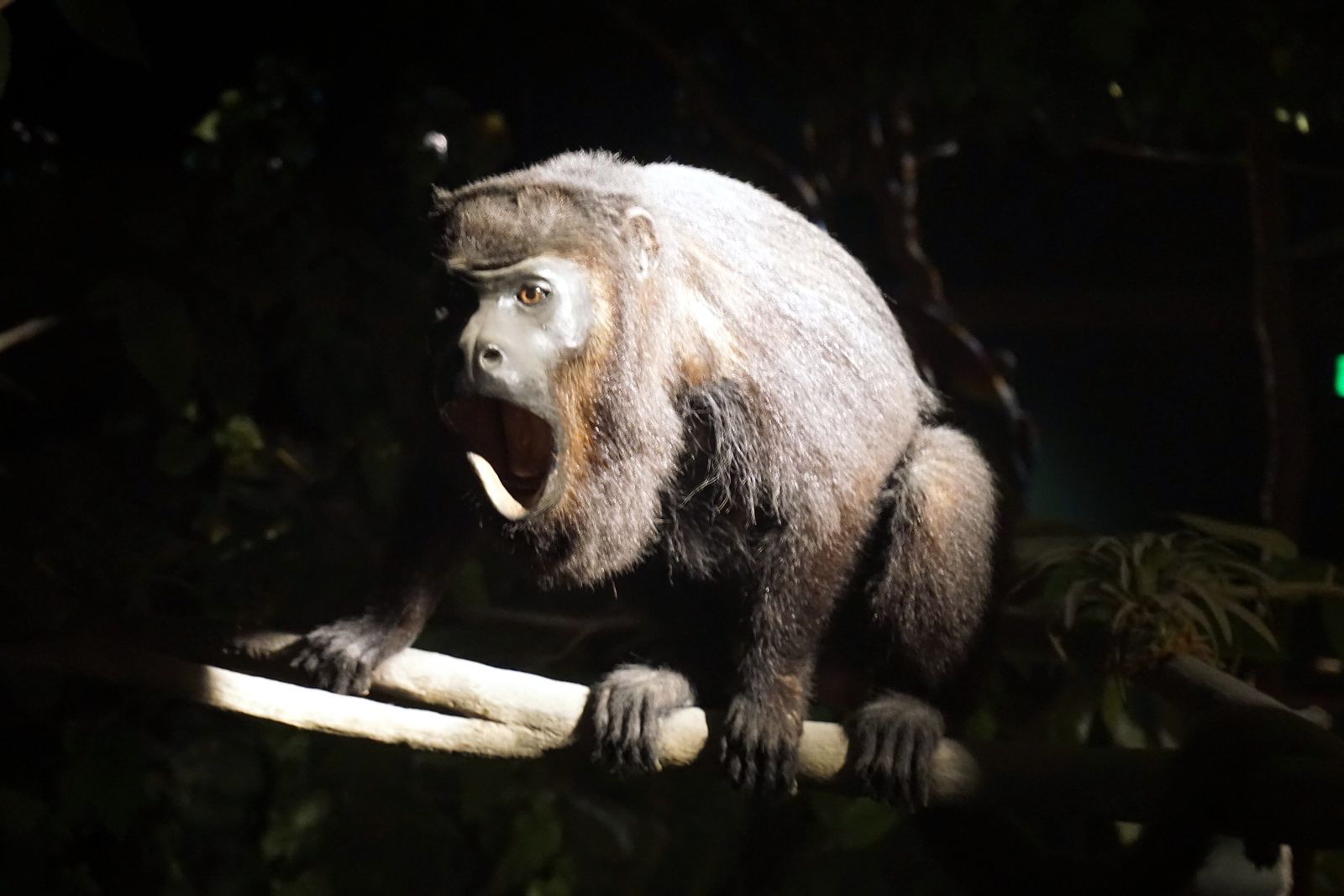 Photo: Michael Barera, CC BY-SA 4.0
The Monkeys of the Rainforest
Howlers waking you at dawn, capuchins raiding the deck — a field guide to the primates you will meet on a jungle stay, and where to meet which.
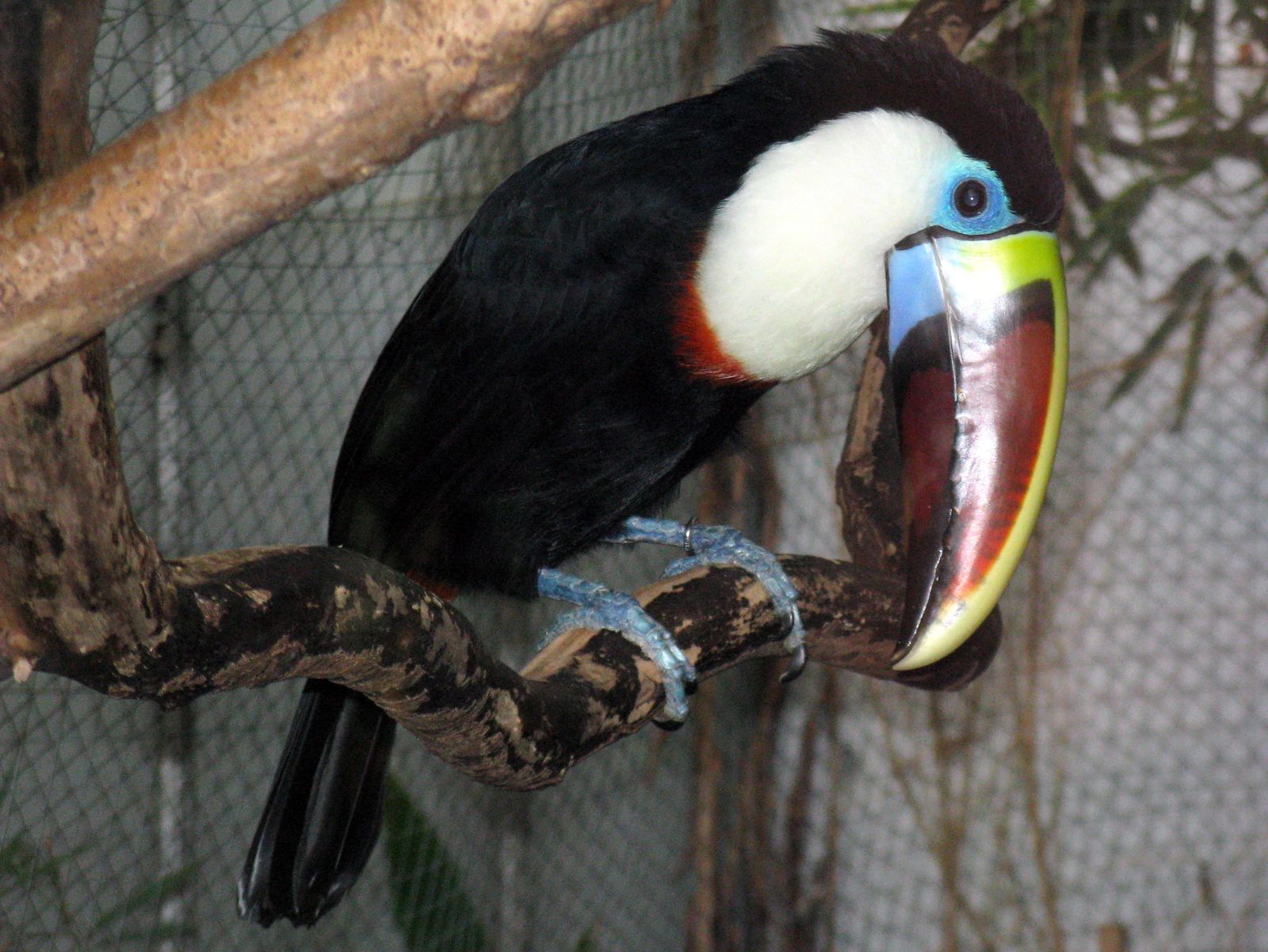 Photo: Charles Miller from Basingstoke, United Kingdom, CC BY 2.0
Toucans & the Tropical Birds You'll See
The rainforest is the richest bird habitat on earth. Toucans, macaws, quetzals and hummingbirds — what to look for, and the best places to look.
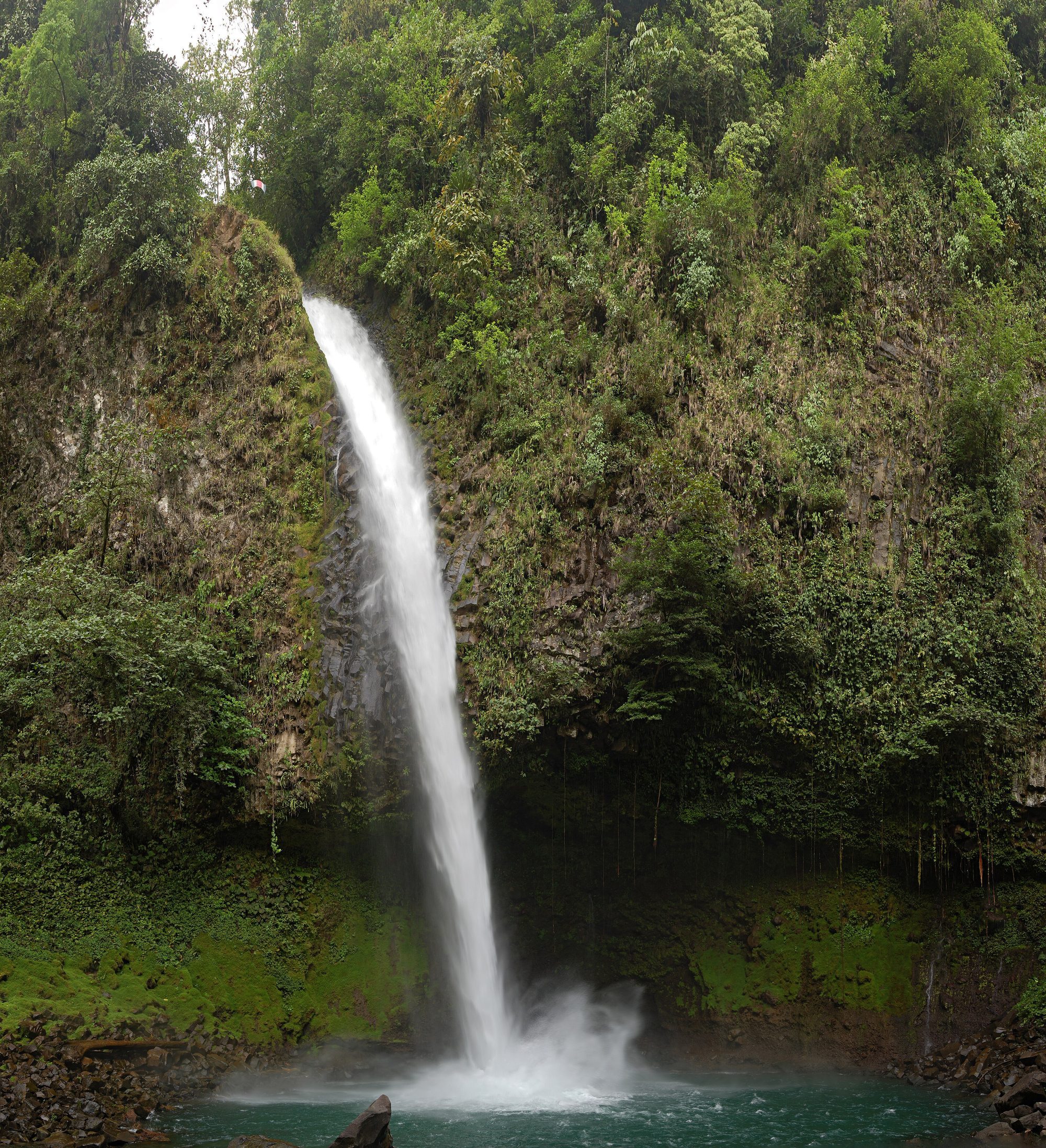 Photo: Derek Ramsey (Ram-Man), CC BY-SA 4.0
Find your own piece of the canopy.
Treehouses, bamboo houses and rainforest villas across 17 destinations — found, vetted and written up honestly.
Browse all destinations